April 30, 2026 • Stuart, FL
Internal Linking Strategy for SEO: How to Connect Your Pages Like a Pro
Here's something most business owners don't realize: you might already have all the SEO power you need sitting on your own website right now.
I'm talking about internal linking strategy for SEO. It's one of those tactics that doesn't get the attention it deserves, but it's absolutely critical if you want Google to rank your pages higher. We've seen it transform websites here in Stuart, and I'm going to walk you through exactly how to do it.
What Is an Internal Linking Strategy for SEO?
Let me keep this simple. An internal link is just a hyperlink that points from one page on your website to another page on the same website. That's it. No external sites involved.
When you create an internal linking strategy for SEO, you're being intentional about where you place those links and what text you use. You're not just randomly linking pages together. You're building a structure that helps both Google and your visitors understand what your site is really about.
Think of it like this: if your website were a building, internal links would be the hallways and staircases connecting all the rooms. Without them, visitors would be stuck in one room with no way to explore. Google's bots would have a harder time finding everything you've created too.
Why Internal Links Matter for Your Rankings

Here's the thing about Google's algorithm. It doesn't just read your pages once and move on. It crawls your entire site, following links from page to page. When you don't have a solid internal linking strategy, you're making Google's job harder. And when Google has to work harder, your rankings suffer.
Internal links do three major things for your SEO:
First, they distribute page authority throughout your site. When you link to a page using keywords in the anchor text, you're telling Google what that page is about. You're also passing along some of the authority from the linking page.
Second, they help Google discover new pages. If you've created a new blog post or service page but haven't linked to it from anywhere on your site, Google might not find it for weeks. Good internal linking changes that.
Third, they keep visitors on your site longer. When people click from one relevant page to another, they're exploring more of what you offer. That lower bounce rate signals to Google that your content is valuable.
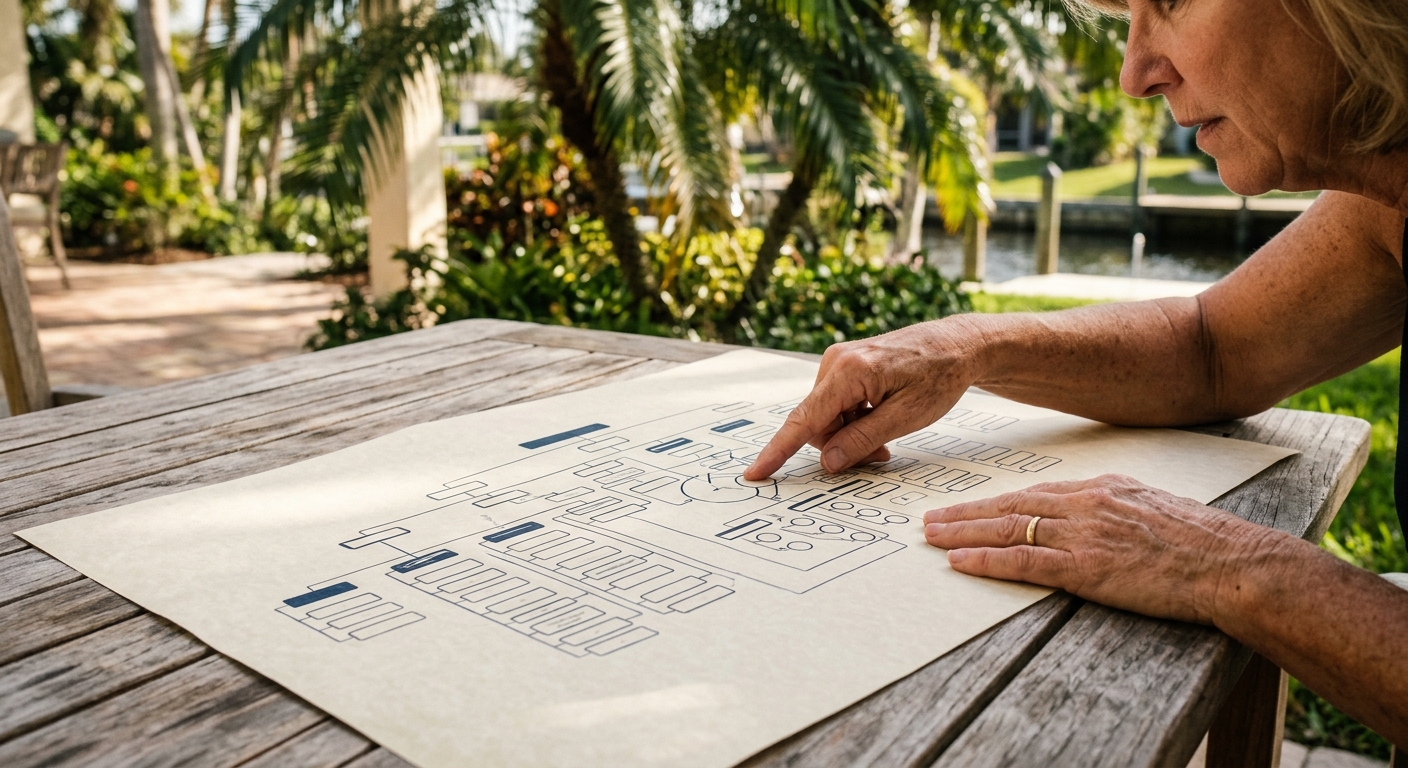
As you can see in the image above, a well-structured site has internal links flowing between related content. That's what we build for our clients at MarketKing AI, and it works.
Check out how SEO works in 2024 on Search Engine Journal if you want to read more about how search engines evaluate internal link structures.
The Basics of Building Your Internal Linking Strategy
Let me break down how we approach this at our Stuart office. It's not complicated, but it does require some planning.
Start by mapping out your website architecture. What are your main topic areas? What subtopics sit under each one? If you're a plumber, your main topics might be "drain cleaning," "water heater repair," and "emergency services." Under drain cleaning, you might have "kitchen sink drains," "basement drains," and "clogged toilet repair."
Once you've got that map, you know where your links should go. A page about kitchen sink drains should link up to your main drain cleaning page. It should also link to related services like water heater repair if there's a natural connection.
The key word here is natural. Don't force links where they don't belong. If you're writing about drain cleaning and you randomly link to your about page, that's not helpful. The link needs to make sense to the reader.
Anchor Text Matters More Than You Think
This is where most people mess up their internal linking strategy. They'll link to a page using generic text like "click here" or "learn more." That tells Google nothing about what the linked page is about.
Instead, use descriptive anchor text. If you're linking to a page about emergency plumbing services, use anchor text like "24-hour emergency plumbing services" or "same-day emergency repairs." That tells Google exactly what the page is about. It reinforces your SEO keywords too.
But here's the balance: don't stuff keywords into every single link. That looks spammy and it's annoying to readers. Mix it up. Some links can be branded ("MarketKing AI's SEO services"), some can be keyword-focused ("internal linking strategy"), and some can be casual ("find out more about our process").
How Many Internal Links Should You Include?
There's no magic number here. We typically recommend that each page includes 3 to 8 internal links, depending on the length of the content. A short blog post might have 3 links. A comprehensive guide could have 10 or more.
What matters is that each link serves a purpose. It should either help the reader learn more about a related topic or encourage them to take action. If you're writing about your pricing, you might link to your FAQ page or a case study showing your ROI.
The image you see here shows a content page with strategic internal links placed throughout. Notice how they're embedded naturally within sentences, not just tacked on at the bottom.
Internal Linking Strategy for Pillar Pages and Clusters
This is where things get really interesting. At MarketKing AI, we've been helping businesses build what Google calls "topic clusters." The idea is simple: you create one authoritative page on a broad topic, and then you create multiple detailed pages about subtopics related to that main page.
The authoritative main page? We call that your pillar page. It links out to all your cluster pages. Those cluster pages then link back to the pillar page. This creates a web of authority that Google loves.
Let's say you're a digital marketing agency here in Stuart. Your pillar page might be "Digital Marketing Services." Your cluster pages could be "PPC Advertising," "Content Marketing," "Email Marketing," and "Social Media Strategy." Each cluster page links back to the pillar page using keywords like "digital marketing services." The pillar page links to each cluster page with specific anchor text.
This strategy is incredibly powerful for SEO. We've seen websites jump from page 3 to page 1 rankings just by implementing this approach correctly.
The Connection Between Internal Links and GEO
Now here's something exciting that most people aren't talking about yet: the future of search is changing, and internal linking strategy is becoming even more important.
Google's not the only search engine anymore. ChatGPT, Claude, Perplexity, and other AI chatbots are becoming how people find information. This shift is called GEO, or Generative Engine Optimization. It's different from traditional SEO, but here's the thing: internal linking still matters.
When AI chatbots crawl your website to understand what you do, they follow the same paths that Google does. If your internal links are strategic and well-organized, those AI tools are more likely to recommend you. They'll understand your expertise better. They'll know exactly what services you offer.
That's why we're so passionate about this at MarketKing AI. We're not just helping businesses rank on Google anymore. We're helping them get recommended by artificial intelligence. Your internal linking strategy is foundational to both.
Common Mistakes We See All the Time
After working with dozens of businesses around Stuart, I can tell you the most common mistakes. First, people link too much to their homepage. Your homepage doesn't need 50 internal links pointing at it. Focus on supporting pages that need ranking power.
Second, they forget about orphan pages. These are pages with no internal links pointing to them. Google might never find them. When you publish something new, make sure you link to it from relevant existing pages.
Third, they use vague anchor text. "Click here," "read more," "this article" — these phrases don't help anyone. Be specific about what the reader will find when they click.
Putting It All Together
Building a solid internal linking strategy for SEO takes time, but it's worth every minute. Start with your site map. Identify your pillar pages and cluster pages. Then methodically go through your content and add links where they make sense.
Focus on anchor text. Make sure it's descriptive. Make sure it reinforces your keywords naturally. Check out Google Search Console to see which pages are getting linked the most. That tells you where your authority is concentrated.
If you're running a local business here in Stuart, this is especially important. You might not have the budget for tons of external backlinks, but you can absolutely control your internal linking. You own every single link on your website. Use that power.
At MarketKing AI, we spend time on this with every client because we know it works. We see the rankings improve. We see the traffic increase. We watch as their website becomes more authoritative in the eyes of search engines, both traditional and AI-powered.
If you're ready to audit your internal linking strategy and see where you're losing opportunities, we'd love to help. We're right here in Stuart, and we've built these systems for businesses across every industry. Let's connect and talk about what your site needs.
Ready to Rank #1 in Stuart, FL?
We build AI-powered SEO content that gets local businesses to page one on Google.
See Plans & Pricing →